What is my system actually worth in rebates?
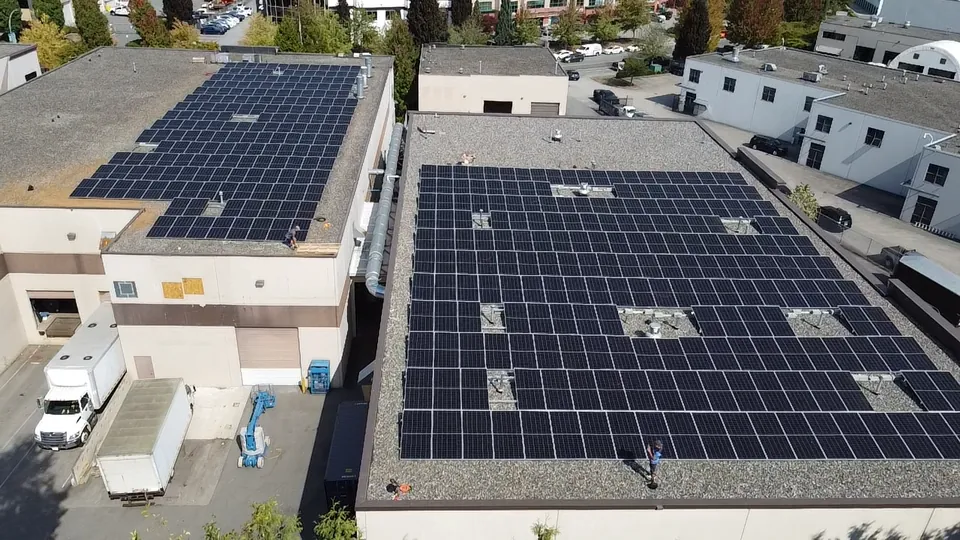
Eligible homeowners can claim $1,000 per kW of installed solar capacity, up to $5,000, and a further $500 per kWh of paired battery storage, up to $5,000 with Peak Saver enrolment. Both are capped at 50% of the installed cost. Commercial and multi unit buildings can claim up to $10,000 on the solar side.
Will my solar keep running in a power outage?
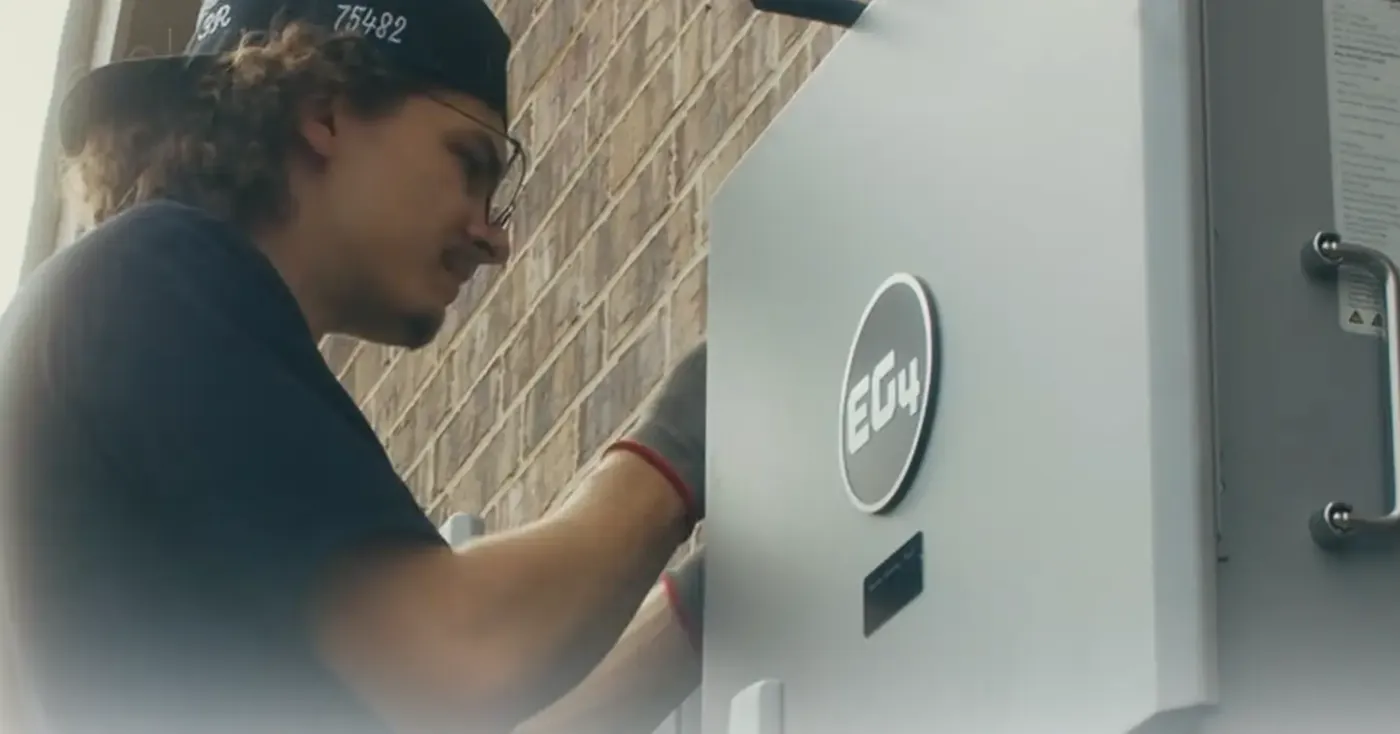
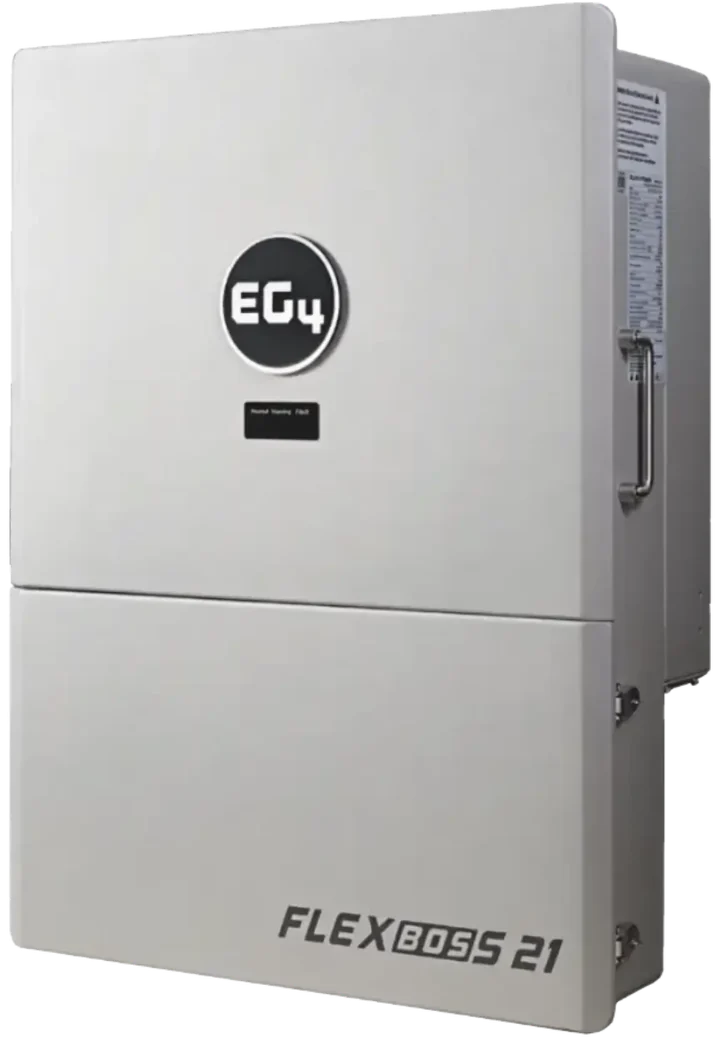
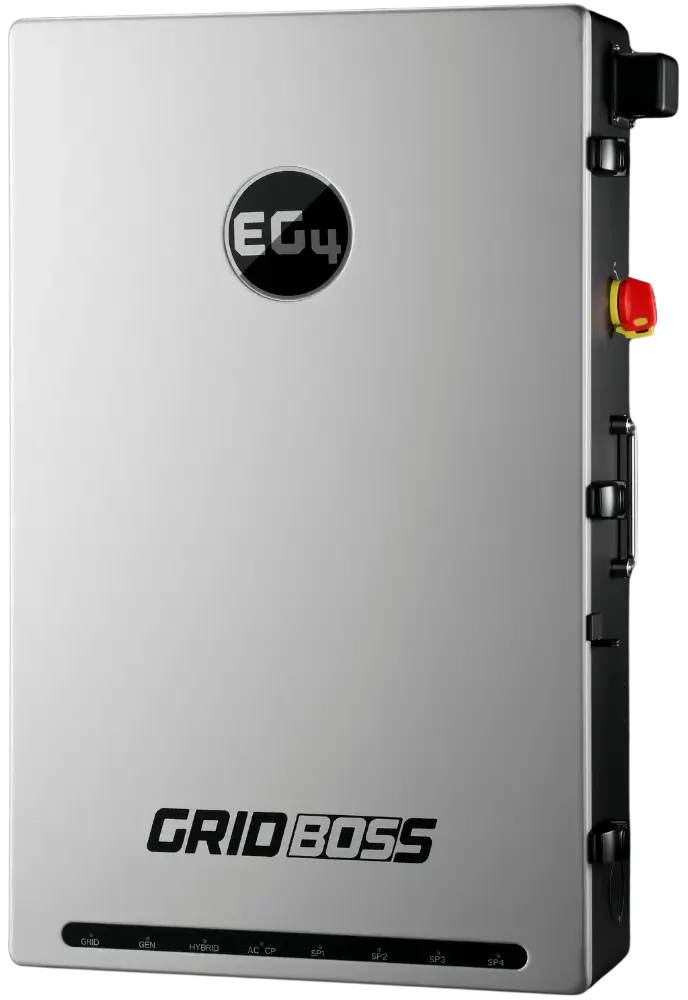
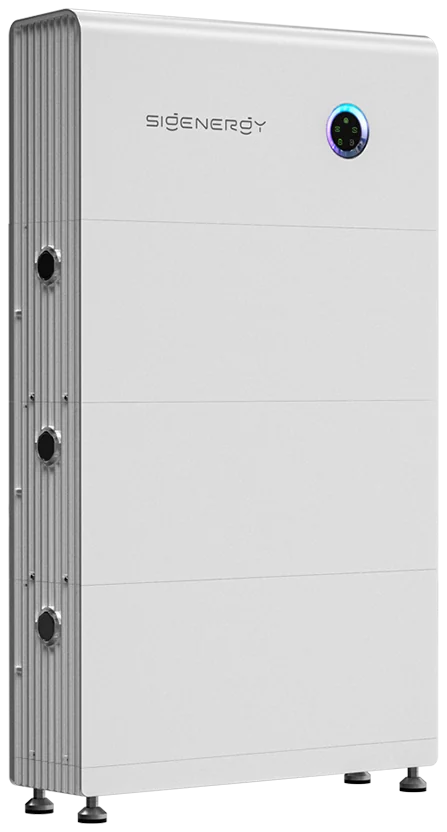
Not on its own. A standard grid tied system shuts itself off automatically the moment the grid drops, which is a safety rule: if it kept generating it would push power back down the line into the crews restoring it. To stay running you need a hybrid system with a transfer switch and a battery. The switch cuts the grid off at the service entrance, the house stops being part of the grid, and your solar and batteries run it as their own island until BC Hydro comes back.
Whole home backup or critical load backup?
Whole home backup keeps every circuit in the house live, and smart load management sheds the EV charger, hot tub and hot water tank automatically during an outage so the storage lasts. Critical load backup is the leaner build: we pull the circuits that matter, lights, fridge, furnace fan and internet, into their own subpanel and back up only those, so the battery is sized to the essentials rather than to the whole house. Which one suits you comes out of the assessment.
Does solar really work in Vancouver?
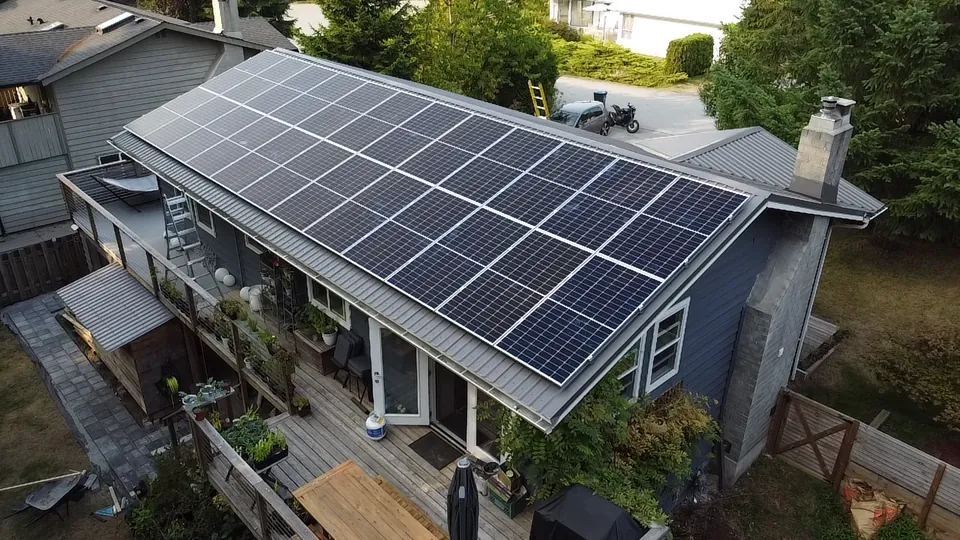
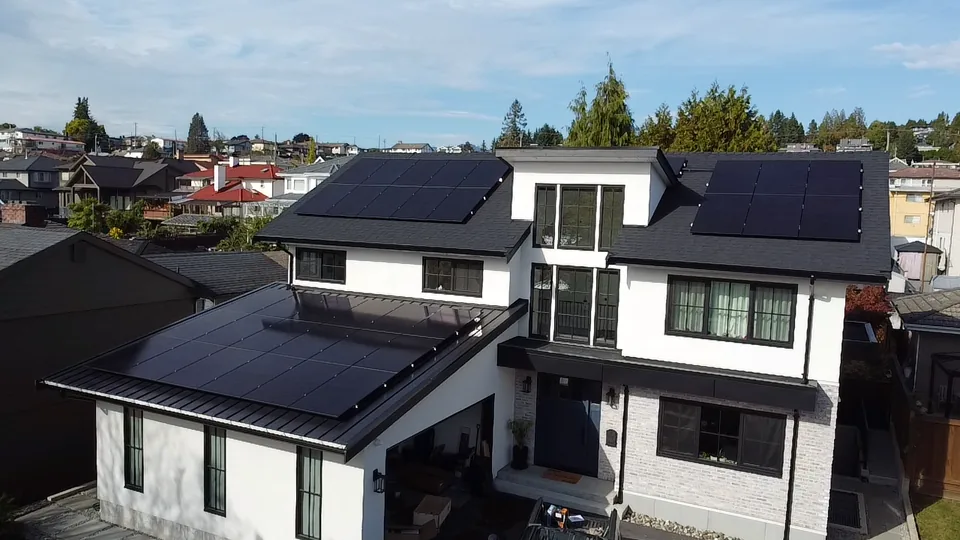
Yes. Grid tied solar performs well here even with our variable weather. Your array overproduces through the long BC summer and the credit offsets what you draw in winter. Panels also generate under diffuse light, not just direct sun.
What replaced BC Hydro net metering?
Net metering, Rate Schedule 1289, closed to new customers on 1 July 2026. New solar customers go onto self generation service, Rate Schedule 2289, where BC Hydro buys your excess generation at 10 cents per kWh and credits you every billing cycle rather than once a year. Existing net metering customers stay on their rate for ten years from their service start date.
Why do you only install microinverters on homes?
Every panel operates independently, so shade on one panel does not drag down the whole string. There is no single point of failure, DC voltage on the roof stays under 80 volts instead of 600 to 1000, and you get per panel monitoring. String inverters still make sense on large unshaded commercial arrays.
What happens when snow loads the panels?
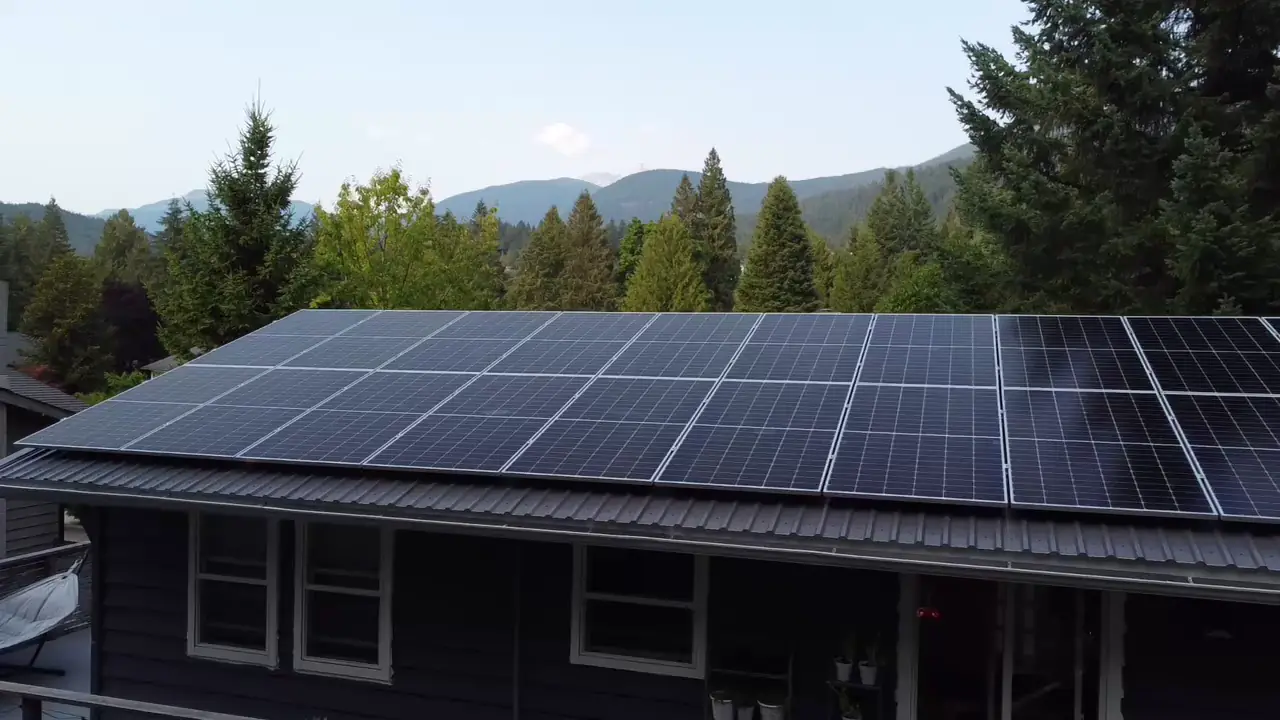
Systems in BC are engineered for the snow load of the area they are installed in. Panels have a smooth surface that sheds snow far better than shingles, and Lower Mainland snowfall is low. If panels do get covered, there is nothing to do but wait.
Is my roof suitable, and what does it do to my shingles?
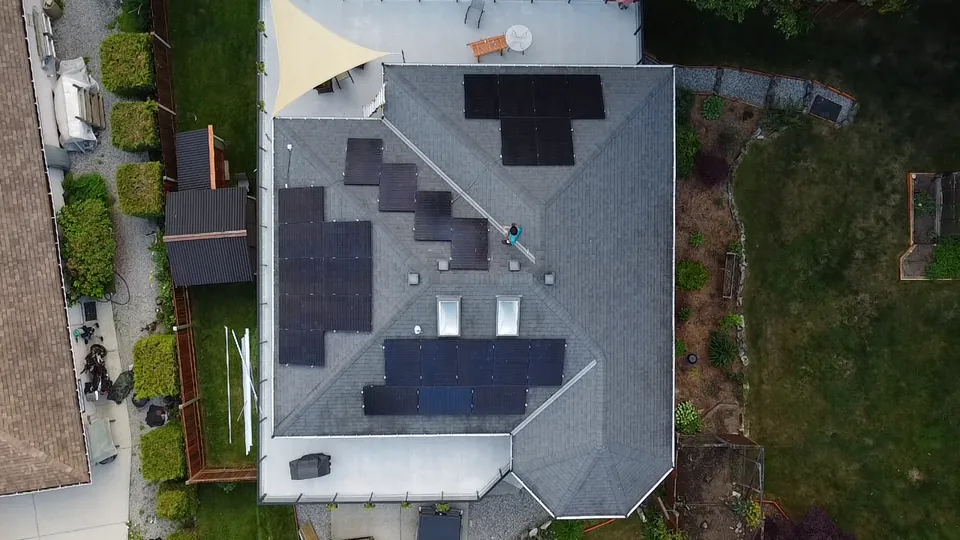
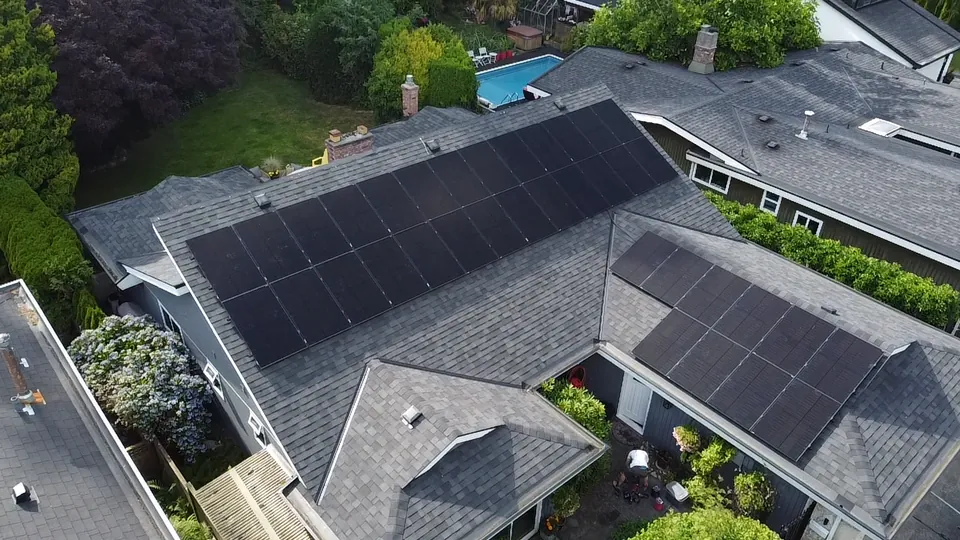
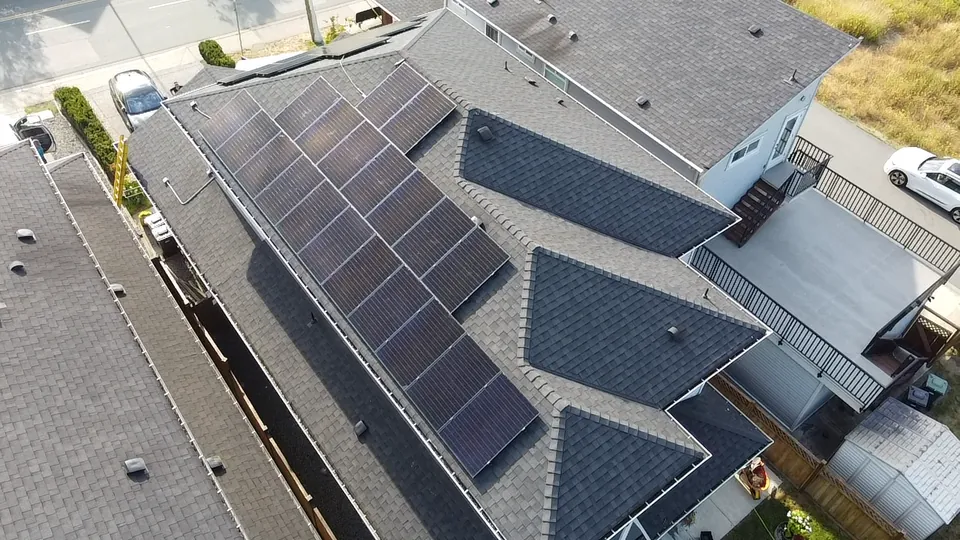
Most roofs are suitable. We install on flat, shingle, metal and composite. Solar actually extends the life of the roof underneath it by shielding it from direct sun. On shingles we lag directly into the truss centres through flashing with three layers of waterproofing. We do not install on anything steeper than a 12 by 12 pitch.
How long will the system last?
Every product we install carries a minimum 25 year manufacturer warranty rated for California conditions. In the milder Lower Mainland climate these systems realistically run 30 years or more.
How much maintenance is involved?
Almost none. Rain does the cleaning. If a panel gets dirty, a garden hose or a soft brush is enough, and because each panel has its own microinverter only that panel underperforms until it is cleaned. Monitoring flags anything unusual before you would notice it on a bill.